Kemper Museum of Contemporary Art, Kansas City, MO
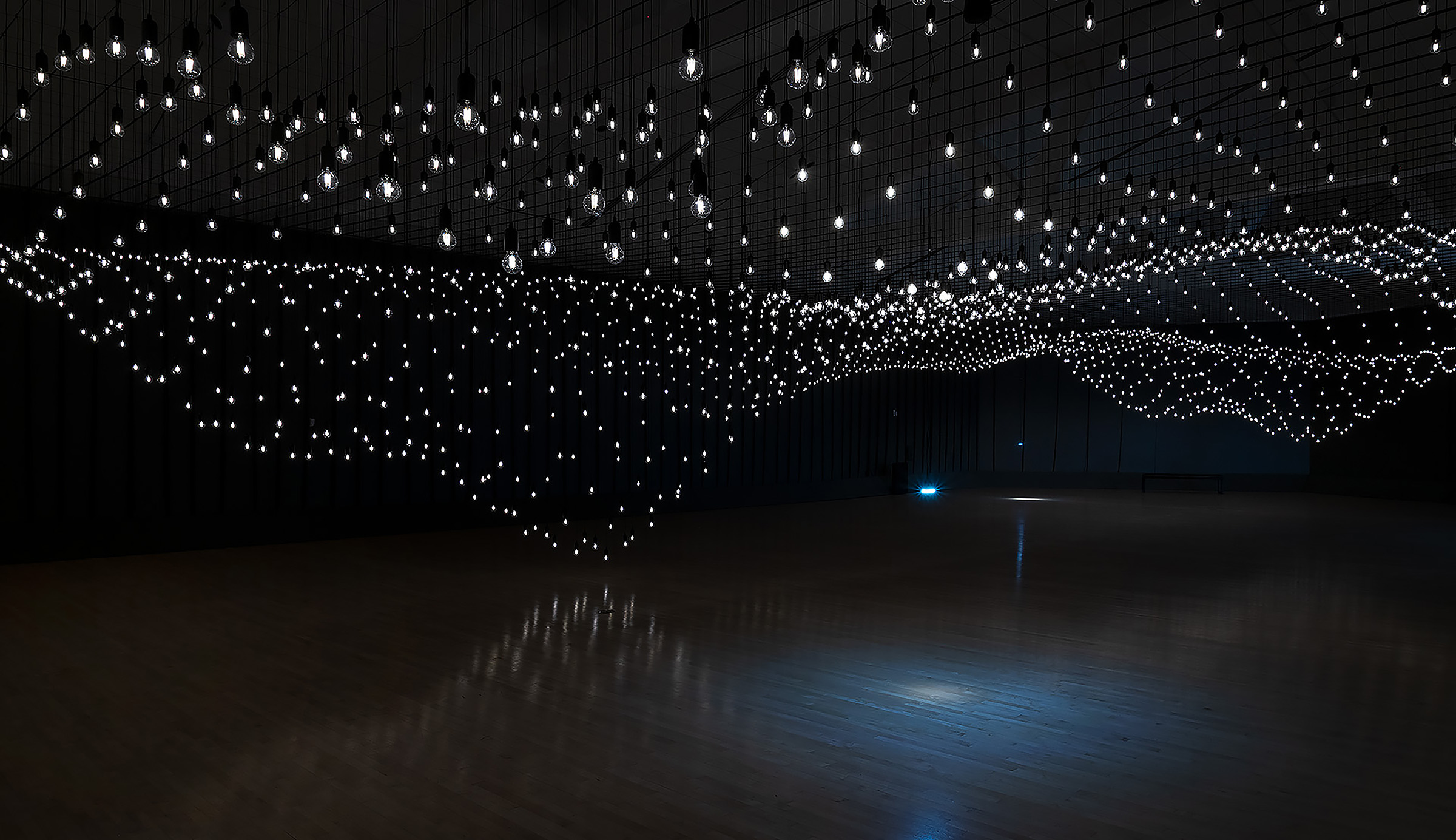
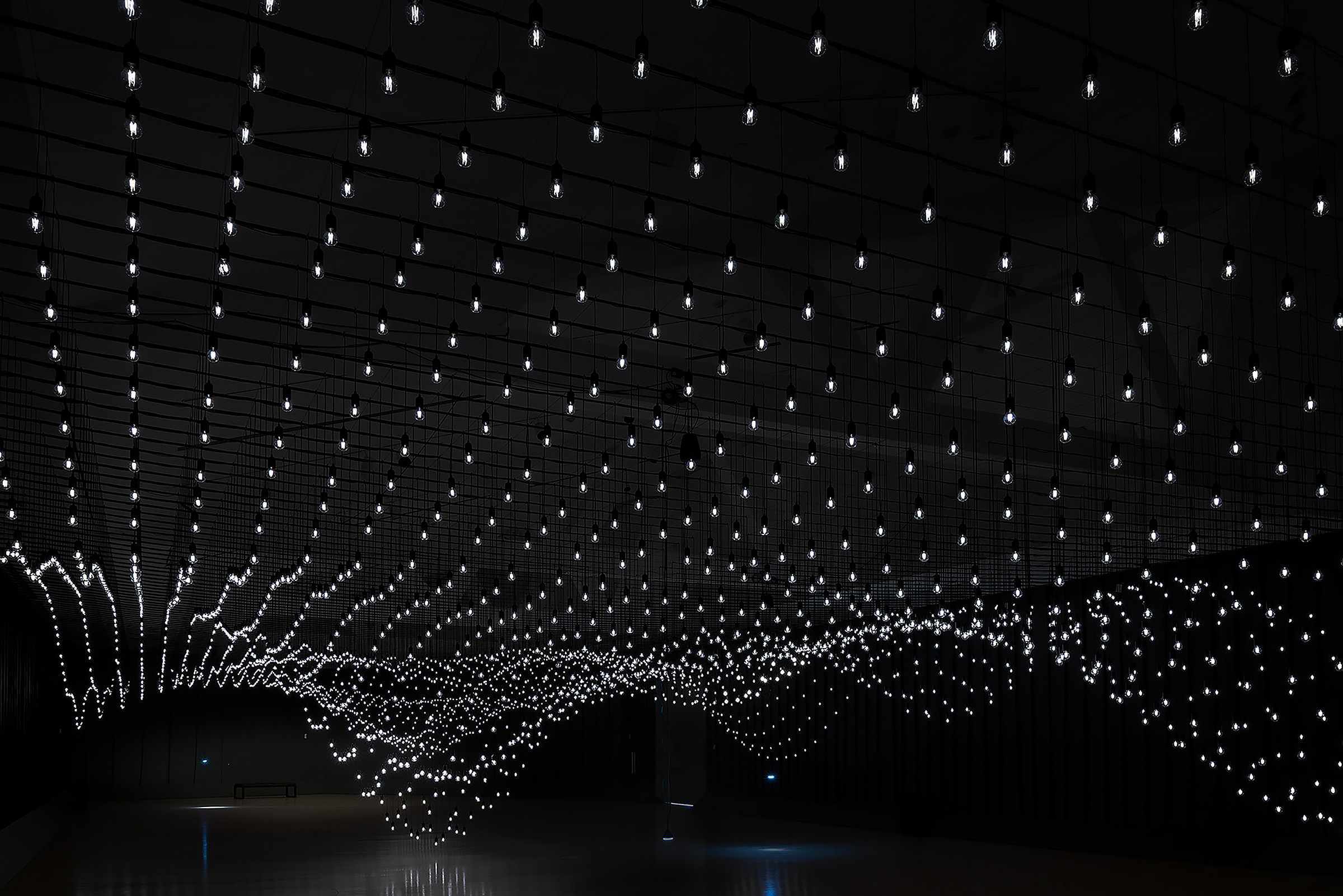
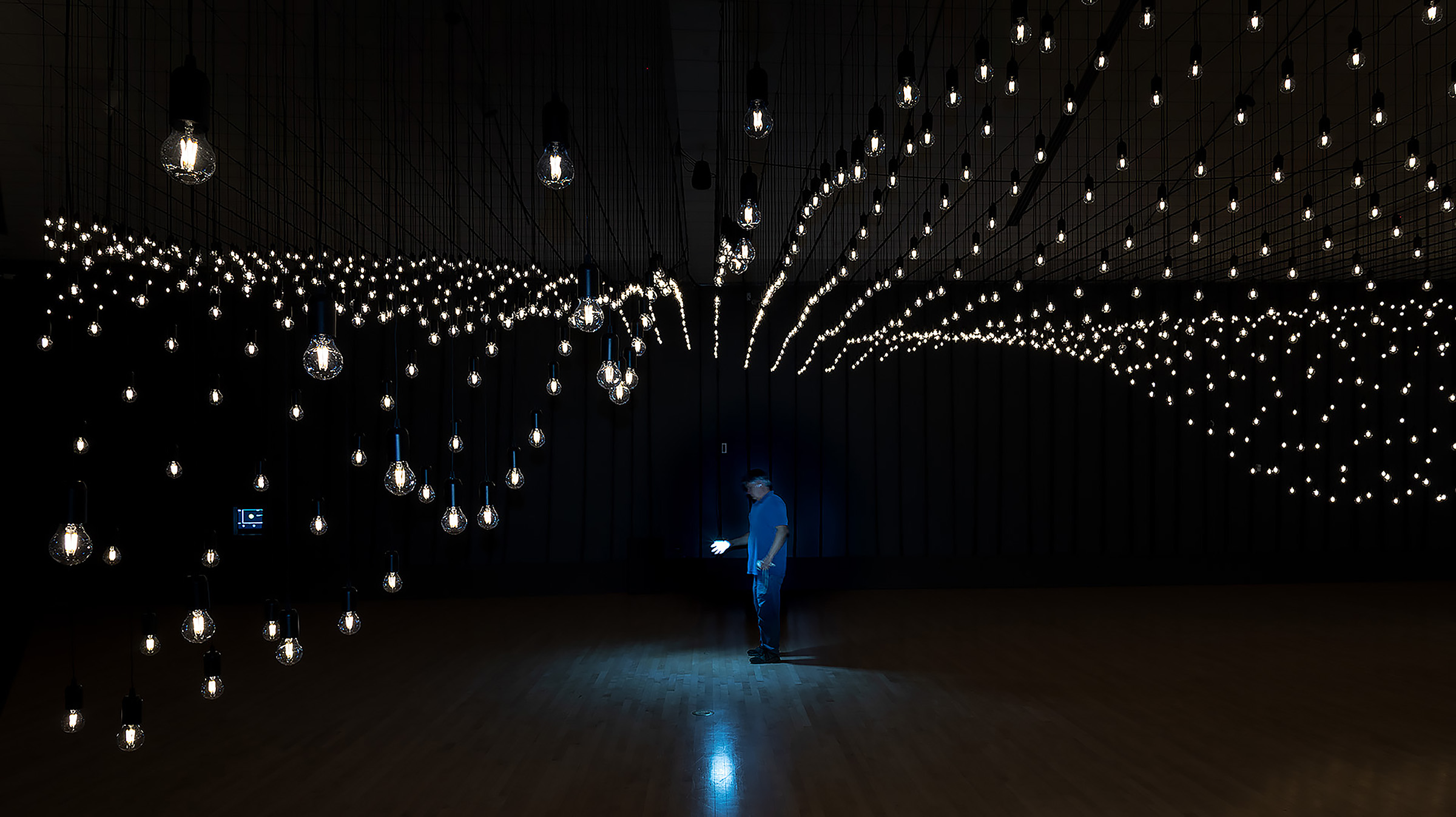
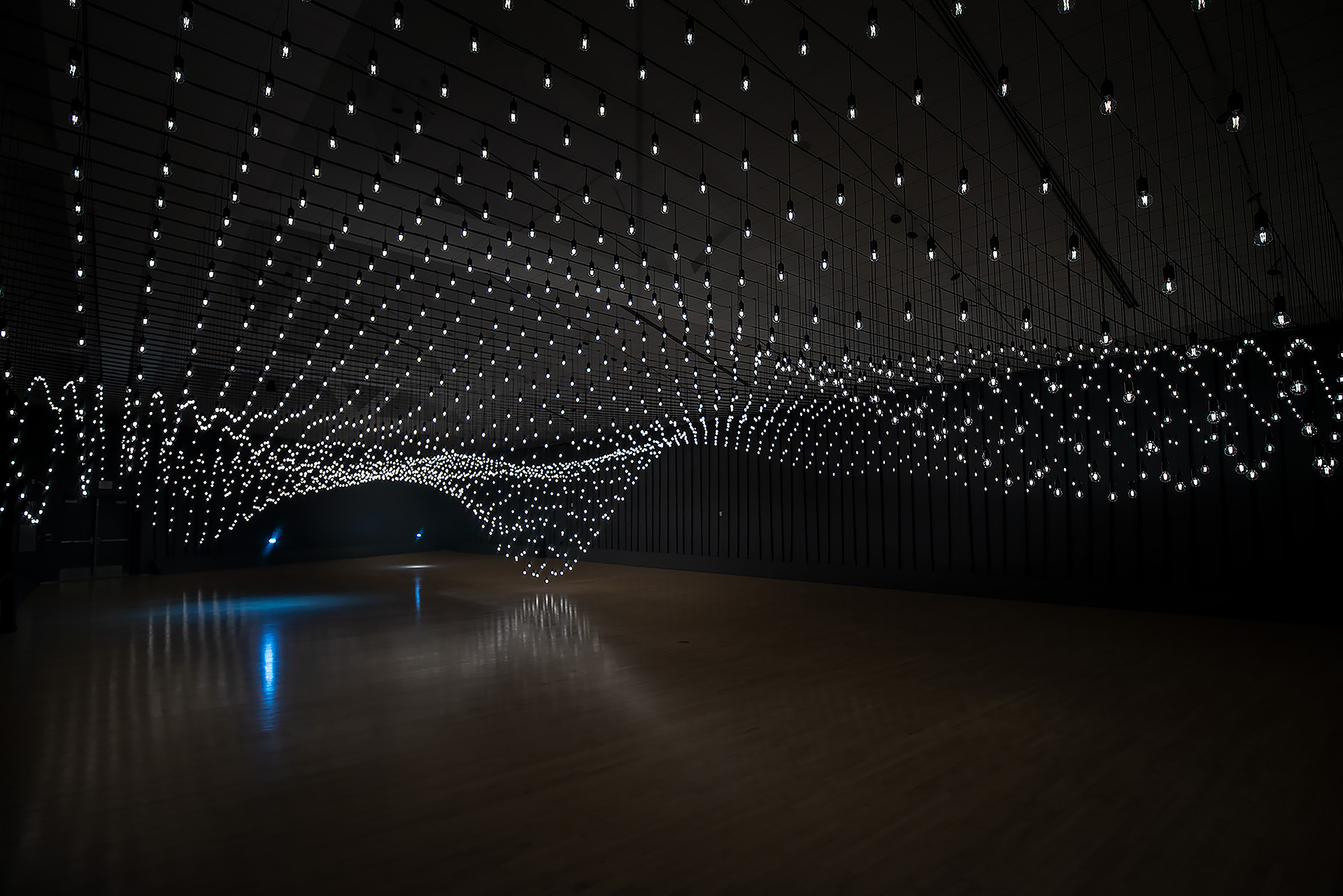
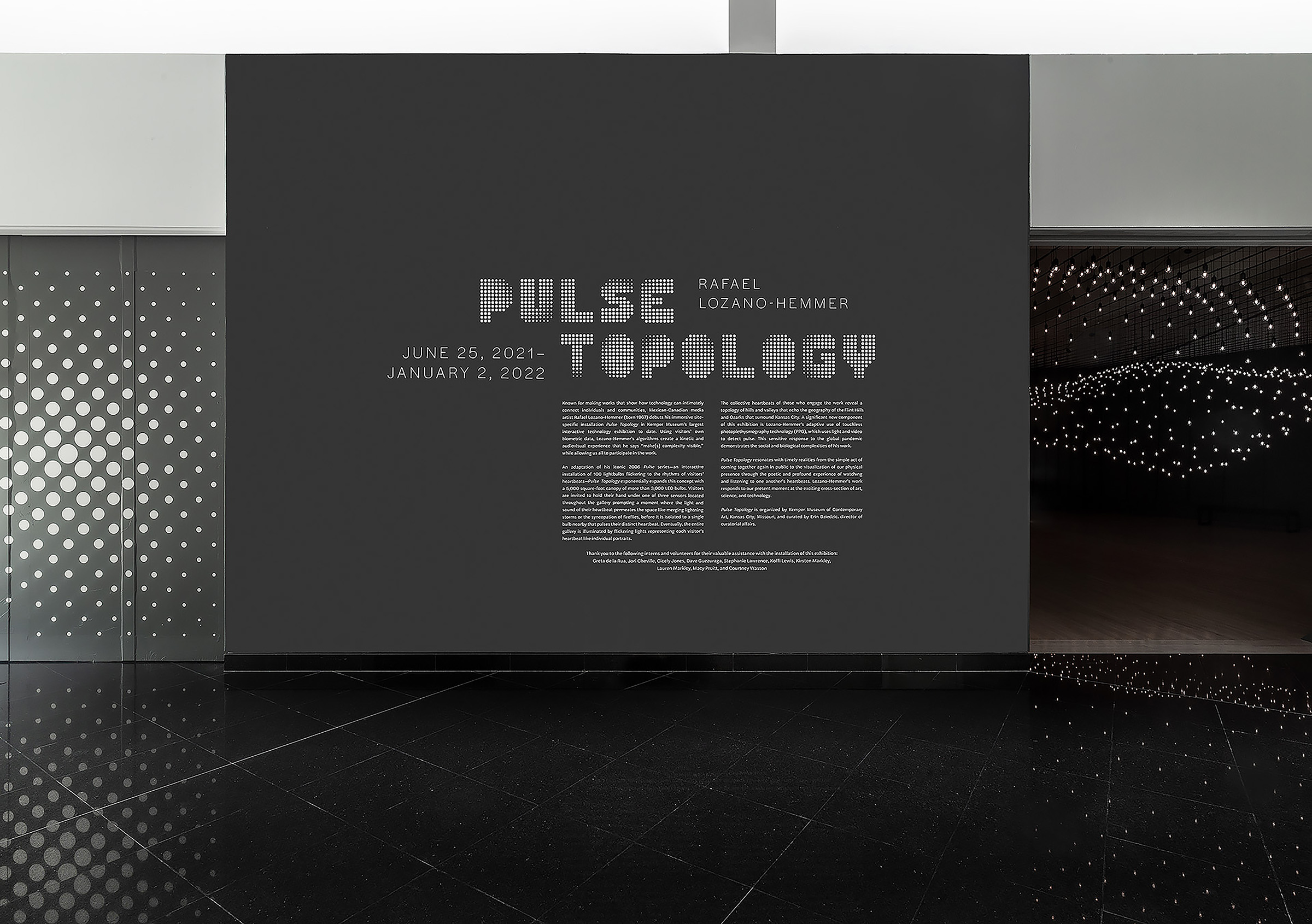
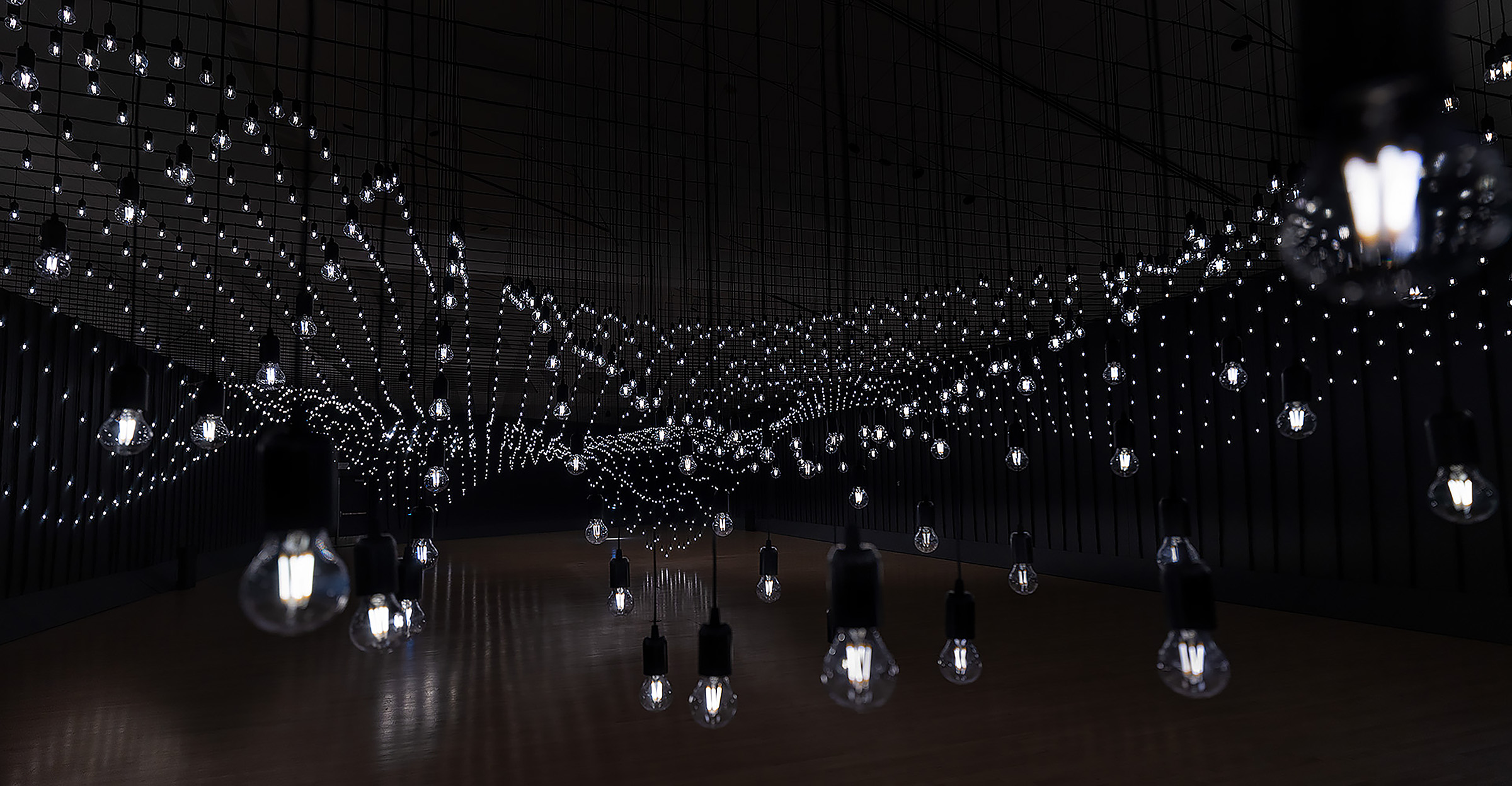
Pulse Topology was an immersive light and sound environment by Mexican-Canadian artist Rafael Lozano-Hemmer (born 1967), an internationally recognized media artist working at the intersection of architecture, technology, and performance. In his work, Lozano-Hemmer creates platforms for public participation and explores themes of agency, human connection, and civic engagement. This site-specific project features an upside-down canopy of mountains and valleys made from thousands of suspended light bulbs that mirror the pulse of visitor participants. The immersive environment highlights the basic but essential biological element—the heartbeat—shared amongst us all. Presented for the first time at Kemper Museum, Pulse Topology is the latest work in Lozano-Hemmer’s Pulse series, comprised of projects that use heart-rate sensors to create interactive audiovisual experiences from participants’ biometric data.
For the first time in the Pulse series, Lozano-Hemmer integrated breakthrough touchless remote photoplethysmography (PPG) technology that uses computer vision algorithms to optically detect heartbeats.
In place of incandescent bulbs which have been used in Lozano-Hemmer’s previous works, Pulse Topology is powered by LED filament light bulbs. Decreasing the energy required to power the installation has allowed Lozano-Hemmer to significantly increase the scale of the project: while previous installations have included 100–300 lightbulbs, Pulse Topology uses 3,000.
 Erin Dziedzic