Kemper Museum of Contemporary Art, Kansas City, MO
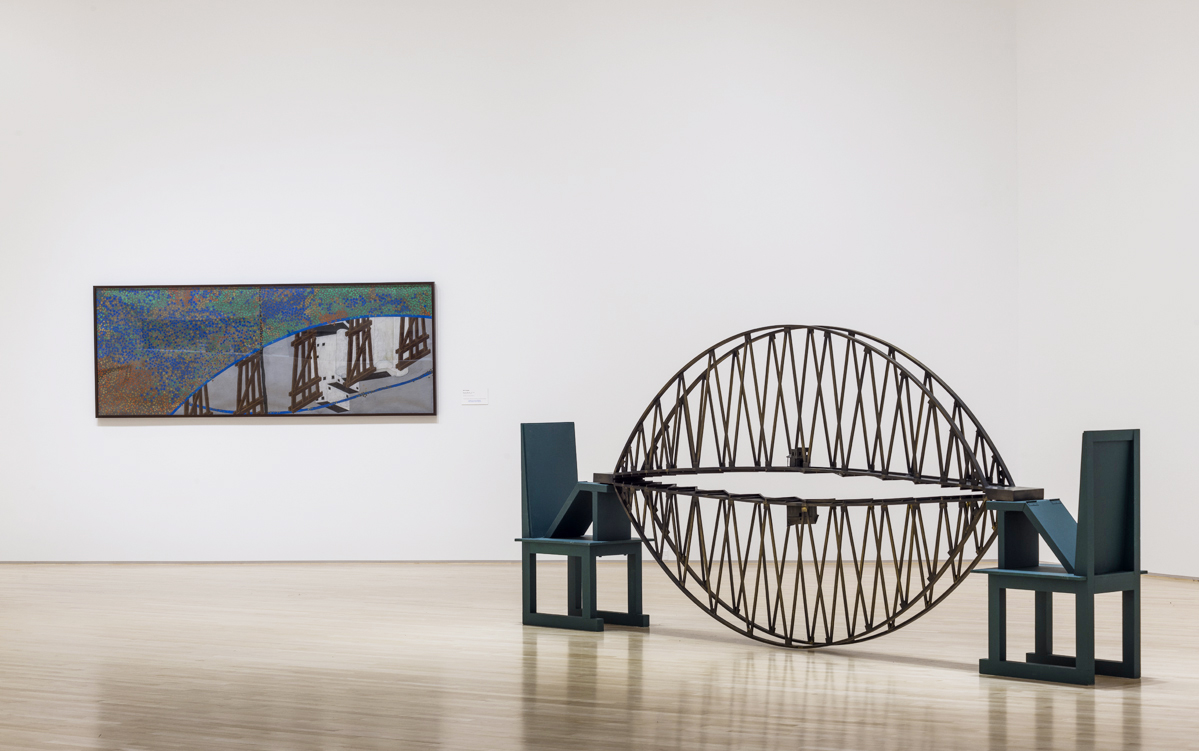
The bridge—both the structure and the concept—has been a major theme throughout the work of Iranian-born, Minneapolis-based artist Siah Armajani. His sculptural bridges since the 1960s explore various forms of bridges while at the same time inviting elements of poetry, ties to Bauhaus notions of usefulness, and a beautiful metaphor for connecting people, places, and community. Armajani is influenced by his extensive readings of the work of German philosopher Martin Heidegger (1889–1976), who describes the bridge as a phenomenological gathering of object and idea, of “earth and sky, divinities and mortals.”1 For Armajani, the bridge expands beyond the notion of passage (movement from one place to another) to engage with perception (physical, temporal, spatial), cultivate civicmindedness (developing creative, cultural, and useful sculptural works for a social community), and locate meaning in language (literary and visual). In their idealized individuality, Armajani’s bridges are sculptures for the public. While we can derive these influences in his works, their presence as bridges ultimately relies on us (the viewers)—as Armajani would himself attest—to be complete.
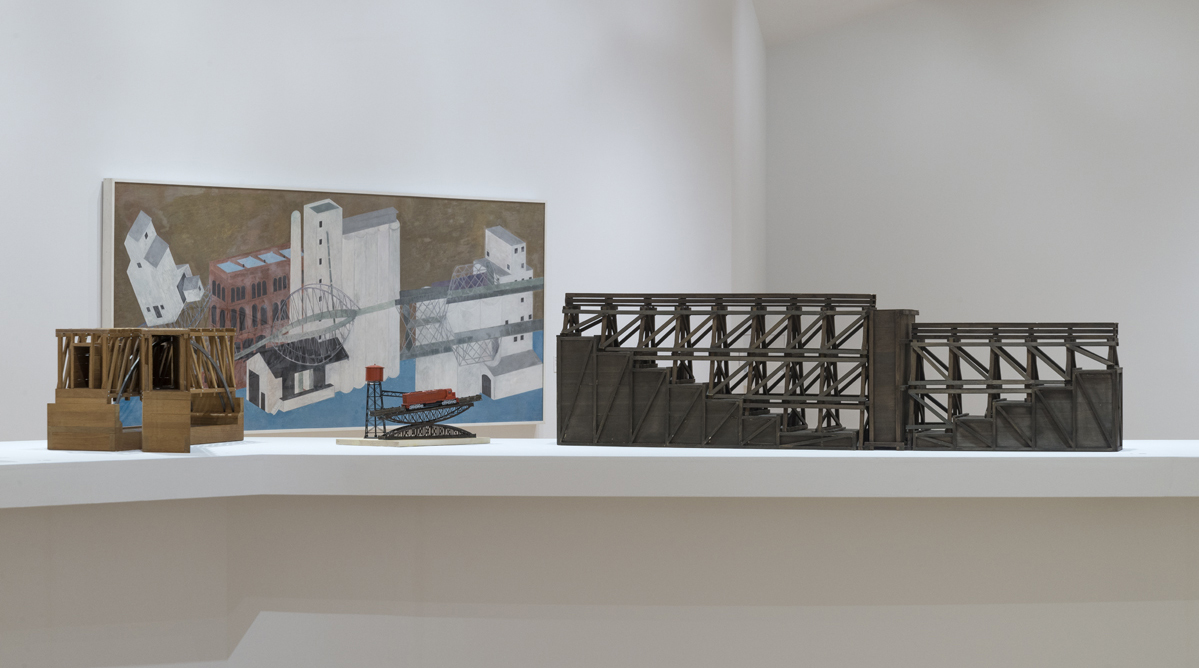
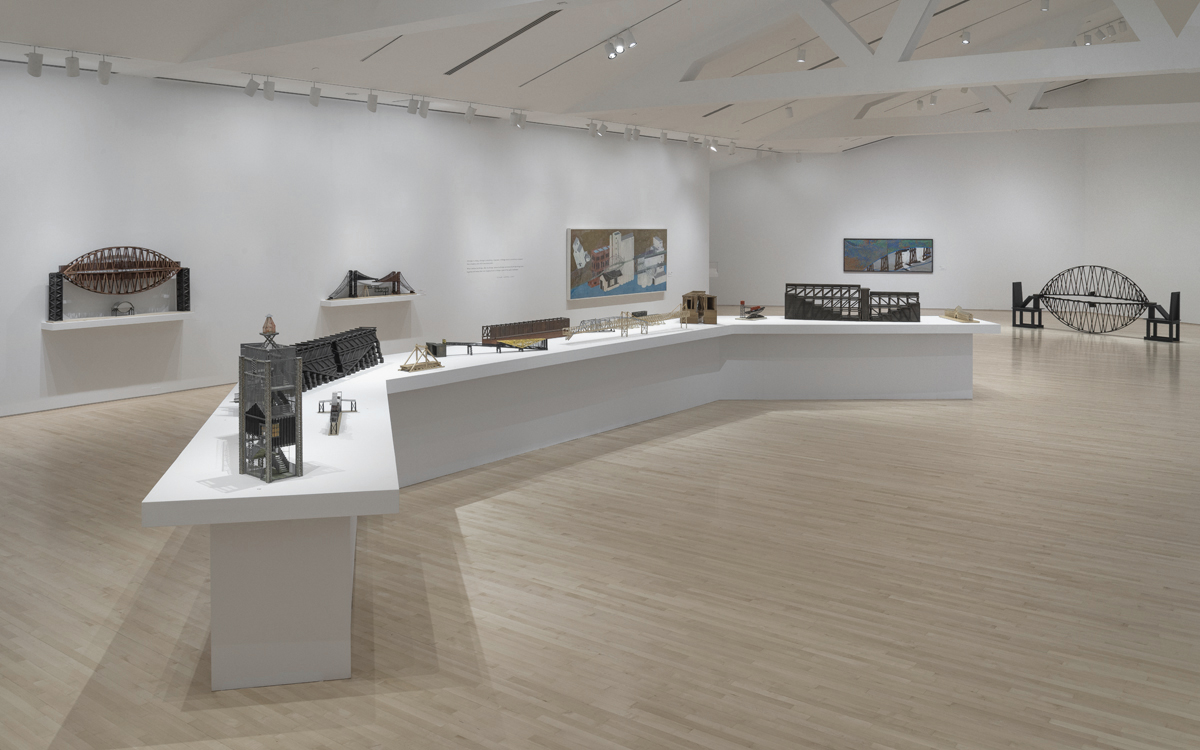
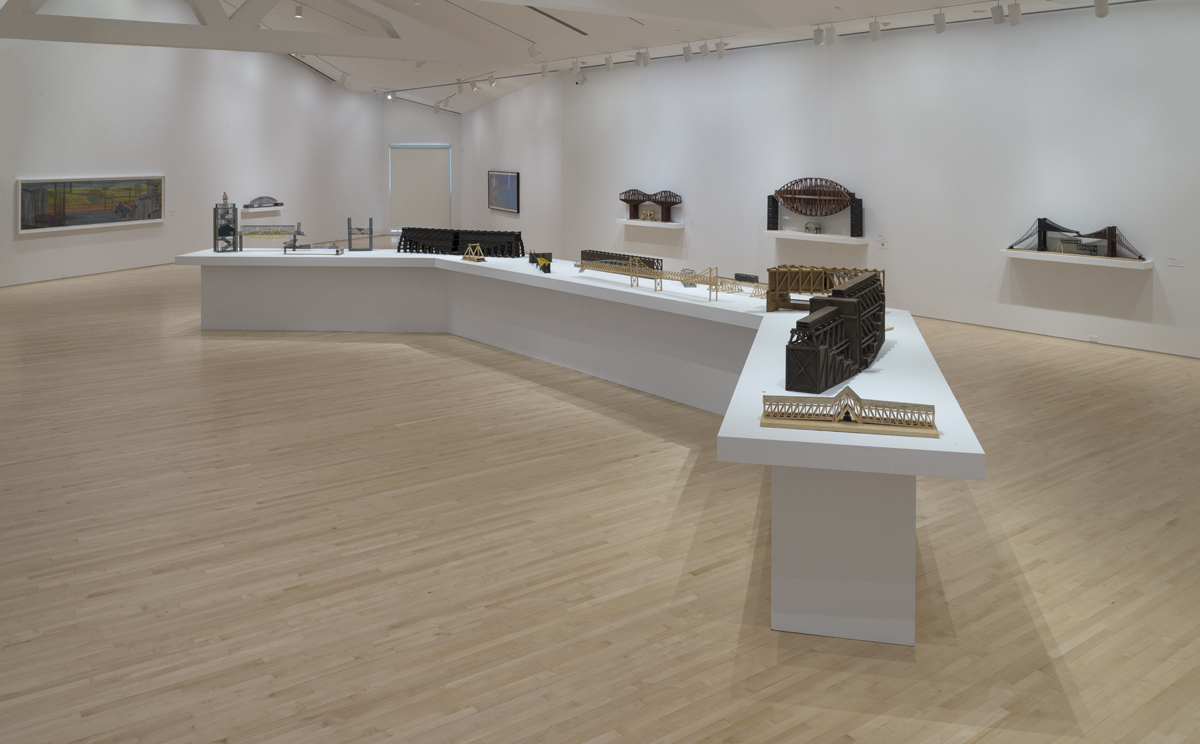
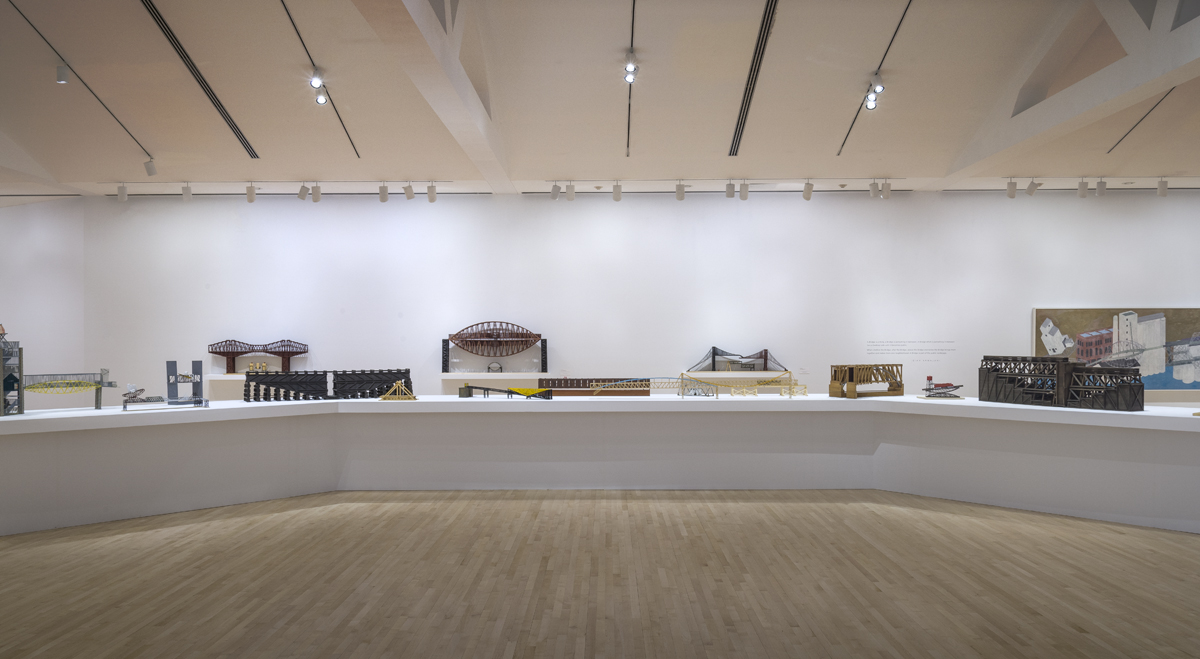
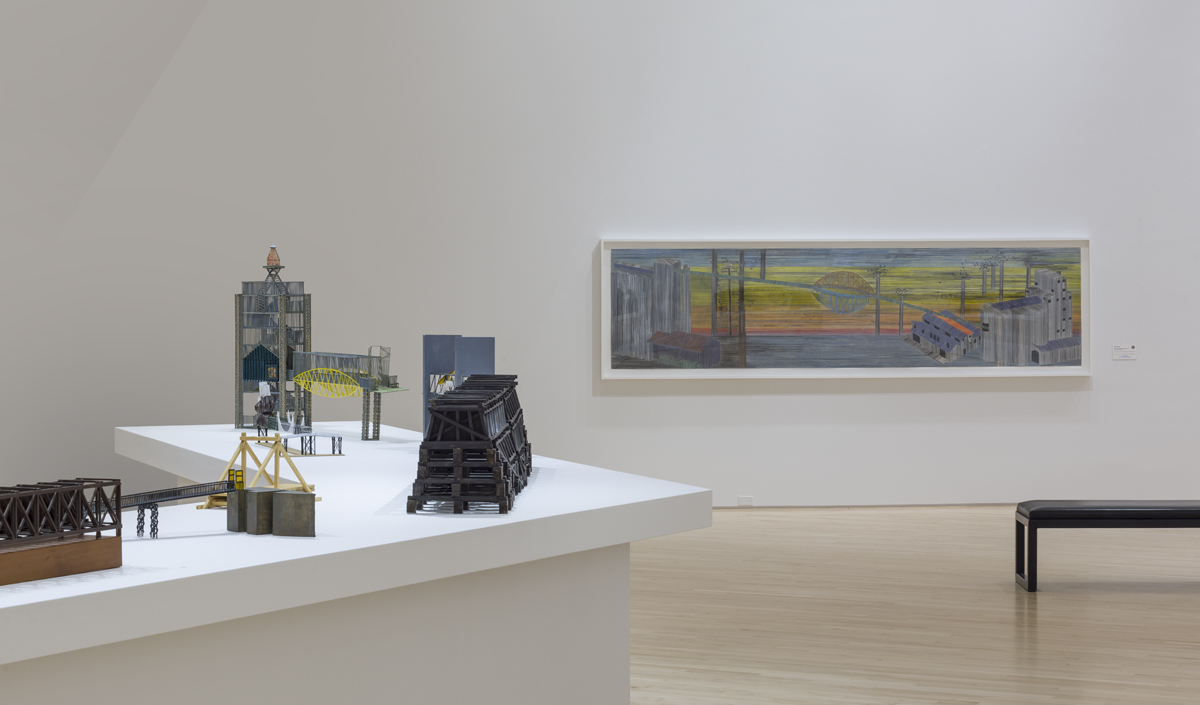
Inspiration for this exhibition came from Armajani’s Kansas City No. 1 (2000), a mural-scale work depicting architecture and industry in Kansas City, gifted by the Sosland Foundation to the Kemper Museum in honor of its twentieth anniversary. Siah Armajani: Bridge Builder presented nearly five decades of the artist’s history with the structure and philosophical underpinnings of the bridge, including the premiere of drawings from a series inspired by Kansas City and Kansas City Bridge #2 (2016), created for this first–ever exhibition of its kind.
Note: Martin Heidegger, “Building Dwelling Thinking,” in Poetry, Language, Thought, trans. Albert Hofstadter (New York: Harper & Row, 1971), 149–50.

 Erin Dziedzic